
Amos Kipruto’s 2:01:09 victory in Chicago offers a powerful lesson in endurance, race execution and the demands of elite
 By Tempo
October 12, 2026
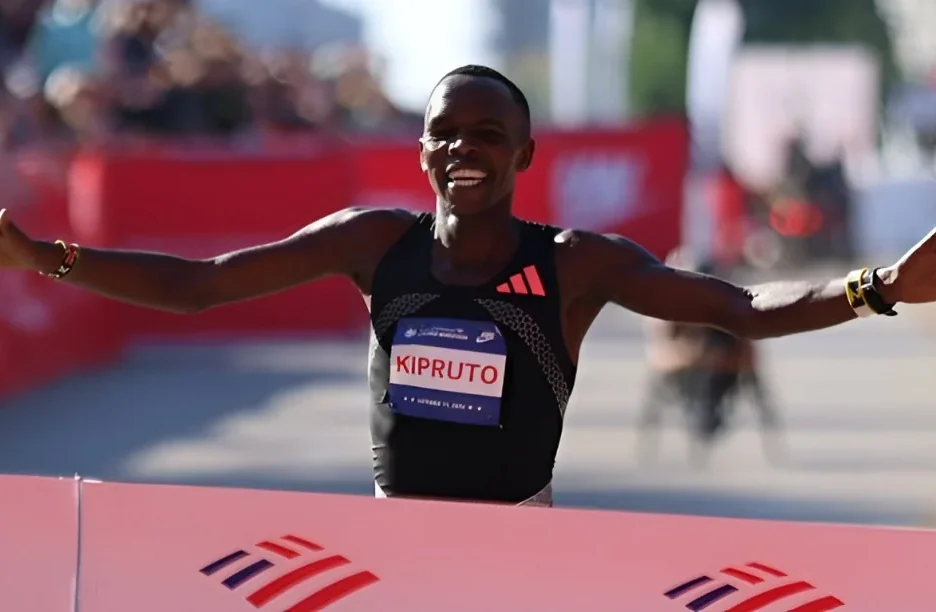
Kenya’s Amos Kipruto won the 2026 Bank of America Chicago Marathon on 11 October in a personal-best time of 2:01:09. After finishing third in 2024 and second in 2025, Kipruto completed his progression to the top of the podium with a performance that placed him among the fastest marathon runners in history.
In the women’s race, Ethiopia’s Hawi Feysa defended her title in 2:13:33. Kenya’s Sharon Lokedi finished second in 2:14:07, followed by Brigid Kosgei in 2:14:55. For the first time in marathon history, three women finished under 2 hours and 15 minutes in the same race.
These results demonstrate how far elite marathon performance continues to advance—and what athletes, coaches and sports organisations can learn from it.
Kipruto’s Chicago journey illustrates the value of sustained development. Third place, second place and then victory across three editions show that elite performance is not always a single breakthrough moment. It can be the result of repeatedly competing at a high level while refining preparation and execution.
For developing athletes, the lesson is to evaluate progress across training cycles rather than judge an entire season by one race. Coaches should monitor performance trends, recovery, training consistency and the athlete’s ability to reproduce quality efforts.
Kipruto moved away from pre-race favourite Jacob Kiplimo in the second half of the race and maintained his advantage to the finish. That decisive phase highlights the importance of tactical awareness, controlled effort and the ability to respond when the race changes.
A marathon is not simply a test of who can run fastest in the early kilometres. Athletes must manage effort, conserve energy and make sound decisions as fatigue increases.
Training should therefore prepare runners for more than a target pace. It should develop the ability to maintain form, recognise changes in effort and respond intelligently under pressure.
Feysa, Lokedi and Kosgei’s performances created a historic podium. Their results reinforce the importance of recognising women’s endurance sport as a field of exceptional athletic achievement and continuing scientific interest.
For coaches and sports scientists, performances at this level provide valuable opportunities to study pacing, training adaptation, biomechanics and the factors that support sustainable high performance. However, race results alone cannot tell us which training method caused a particular outcome; reliable conclusions require athlete-specific data and careful analysis.
High-level marathon training places substantial demands on muscles, connective tissues and the body’s energy systems. Improving performance is not only about adding more mileage or intensity. It also requires managing training load, sleep, nutrition and recovery.
Athletes should work with qualified coaches and health professionals to adjust training to their individual needs. Persistent pain, unusual fatigue or declining performance should not automatically be treated as a lack of discipline.
The goal is not to complete the hardest possible training session. It is to build the capacity to train consistently and arrive at the start line prepared.
Kipruto’s achievement is a source of pride for Kenyan athletics, but long-term success requires strong development systems. Young runners need structured coaching, appropriate competition, education, injury prevention and access to sound sports-science support.
Talent identification is only the beginning. Sustainable development means helping athletes understand their bodies, develop sound habits and progress at a pace that supports long-term participation and performance.
The 2026 Chicago Marathon was more than a collection of fast times. Kipruto’s victory and the historic women’s podium showed the importance of preparation, tactical decision-making and consistent development.
For athletes and coaches, the challenge is to turn inspiration into practical work: train with purpose, monitor progress, recover intelligently and make decisions based on evidence.
At elite level, excellence is not one session or one race. It is the ability to prepare, adapt and perform when it matters most.
Tempo Associates & Consulting covers athletics, coaching, sports science and athlete development.
Sources: World Athletics — Chicago Marathon report · Official Chicago Marathon results