
Eliud Kipchoge’s Melbourne Marathon victory is a reminder that sporting excellence involves more than speed. It also requires
 By Tempo
October 12, 2026
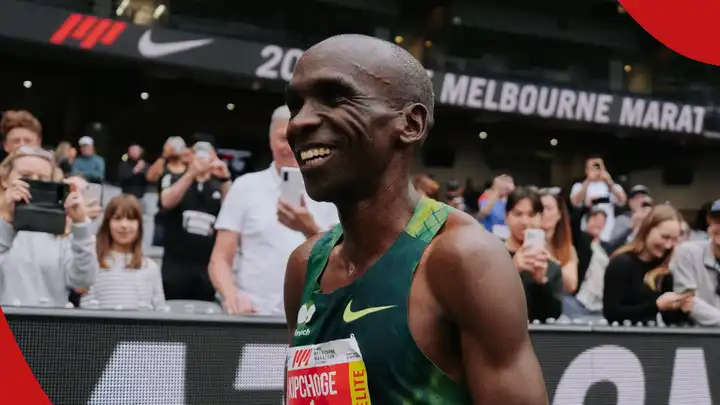
Kenyan marathon legend Eliud Kipchoge won the Nike Melbourne Marathon on 11 October 2026, recording 2:09:10 to set a course record. The two-time Olympic marathon champion returned to the top of a marathon podium for the first time in three years.
At 41, Kipchoge delivered another significant result in a career that has helped shape modern distance running. His performance offers valuable questions for athletes and coaches: How can an athlete sustain competitive ability over many years? What role do recovery and experience play? And how should coaches adapt training as athletes progress through their careers?
Athletes do not respond identically to the same training programme. Age, training history, injury background, lifestyle and recovery capacity all influence how much work an individual can tolerate.
Kipchoge’s latest victory should not be interpreted as evidence that every athlete can or should train in the same way into their forties. Rather, it highlights the value of understanding the individual athlete and adjusting preparation to support continued performance.
Coaches should regularly review training volume, intensity, competition schedules and signs of accumulated fatigue. A programme that worked at one stage of an athlete’s career may need to change later.
Endurance training creates stress that the body must recover from before it can adapt. When training demands repeatedly exceed recovery capacity, athletes may experience persistent fatigue, reduced performance or injury.
Effective recovery is not a single technique. It includes sufficient sleep, appropriate nutrition, sensible scheduling of hard sessions and easier days, and attention to physical warning signs.
For experienced athletes, monitoring how the body responds to training can be particularly useful. Coaches should avoid assuming that every athlete needs more mileage simply because they have a strong competitive history.
Years of competition can help athletes understand pacing, effort, race positioning and how to respond to difficult moments. This experience may support better decisions when fatigue makes judgement more challenging.
During the Melbourne race, Kipchoge moved clear in the final 10 kilometres before finishing in a course-record time. That late-race performance highlights the importance of maintaining the capacity to execute a plan when the physical demands are greatest.
Experience does not remove the need for fitness. It can, however, help an athlete use their fitness more effectively.
Elite endurance sport demands patience and sustained attention. Athletes must manage discomfort, remain focused on their race plan and make decisions under pressure.
Mental skills such as goal setting, constructive self-talk and attention control can be incorporated into training. For example, runners can practise breaking a long session into manageable sections, maintaining focus on technique and responding calmly when a workout becomes difficult.
Mental preparation should complement appropriate physical training rather than encourage athletes to ignore pain, injury or serious fatigue.
Kipchoge’s career offers young athletes a valuable example of commitment to the sport. But the most useful lesson is not simply to train harder or copy a champion’s schedule.
Developing runners need progressive training, qualified coaching, adequate food and rest, education and opportunities to compete. They also need to understand that individual progress differs and that sustainable development matters more than short-term results.
Coaches and sports organisations can support this process by recording training and competition data, evaluating athletes over time, and creating environments where health and performance are treated as connected priorities.
Kipchoge’s Melbourne victory at 41 is an important moment in distance running. His 2:09:10 performance demonstrates that age alone does not determine what an athlete can achieve, although individual outcomes vary considerably.
For athletes, coaches and sports-science professionals, the broader message is clear: build patiently, recover deliberately, learn from experience and adapt the process to the person.
Longevity in sport is not about resisting change. It is about adapting intelligently while continuing to pursue excellence.
Tempo Associates & Consulting covers athletics, coaching, sports science and athlete development.
Sources: World Athletics — Melbourne Marathon results · ABC News — Kipchoge sets Melbourne course record